
Internatıonal Symposıum of FETEC 2026 ın Brasov, Romanıa, 12 - 14 October , 2026

7th International Symposium of
Forest Engineering and Technologies-FETEC 2026
“Digital Transformation in Forest Engineering 4.0 and Beyond: Artificial Intelligence and
Information Systems Applications”
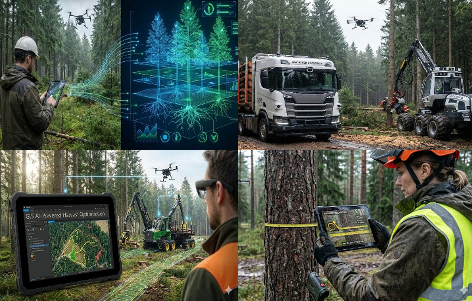
12-14 October 2026
Braşov, Romania
Transilvania University of Brașov, Faculty of Silviculture and Forest Engineering
International Symposium of FETEC 2026
Symposium Rationale
Forestry is experiencing rapid technological advancement as digital tools, automation, and artificial intelligence become integral to modern forest engineering. These innovations are reshaping how forest resources are planned, monitored, and managed, enabling more precise, sustainable, and efficient operations. Forest Engineering 4.0 marks this shift toward smart machinery, data-driven decision-making, interconnected information systems, and advanced sensing technologies. Looking “beyond 4.0” reflects an emerging focus on human-centered, resilient, and environmentally responsible approaches, where technology supports both operational performance and sustainability goals.
This symposium provides a timely platform for addressing these developments by bringing together internationally recognized researchers, practitioners, and stakeholders. It fosters exchange on cutting-edge topics including digital transformation, robotics and automation, intelligent forest road systems, big data analytics, geospatial technologies, climate-smart forestry, AI-driven environmental assessment, and innovations in education such as VR/AR and OBE frameworks. Industry demonstrations and case studies further highlight practical applications and challenges in real-world environments.
7th International Symposium of Forest Engineering and Technologies-FETEC 2026: “Digital Transformation in Forest Engineering 4.0 and Beyond: Artificial Intelligence and Information Systems Applications” will be organized on 12-14 October 2026 by Transilvania University of Brașov in the city of Braşov, Romania. The symposium co-organizers include FETEC Platform and IUFRO Division 3.01.
Symposium Objective
The aim of the symposium is to bring together internationally renowned researchers, practitioners, and stakeholders to discuss the latest scientific and professional advancements in digital transformation for Forest Engineering 4.0 and beyond, with a particular focus on artificial intelligence and information systems applications.
Symposium Topics
- Digital technologies and transformation in forest engineering 4.0 (Digital twins, IoT)
- Robotics and automation in forest operations
- Big data, analytics, and intelligent decision support systems in forest engineering
- Artificial intelligence applications in forestry
- Intelligent and digital solutions for forest road systems
- Sustainable and human-centered forest engineering (Human–AI, Ergonomics)
- Innovations in education, training, and capacity building (OBE, VR/AR)
- Climate-smart and resilient forestry technologies
- Geospatial Information Systems & Remote Sensing (UAV, LiDAR, MS–HS Sensing)
- Industry Solutions, Technology Demonstrations & Case Studies
- Information Systems for Environmental Impact Assessment
- General advances and innovations in forest engineering
Organizational Committee
Prof. Dr. Stelian Alexandru Borz (Chair), Transilvania University of Brașov, Romania
Assoc. Prof. Dr. Ebru Bilici (Co-Chair), FETEC, Giresun University, Türkiye
Assoc. Prof. Dr. Marina Viorela Marcu, Transilvania University of Brașov, Romania
Assoc. Prof. Dr. Eugen Iordache, Transilvania University of Brașov, Romania
Dr. Gabriel Osei Forkuo, Transilvania University of Brașov, Romania
Eng. Ana Alexandra Reyes Robalino, Transilvania University of Brașov, Romania
Assoc. Prof. Dr. Saliha Ünver, Karadeniz Technical University, Türkiye
Assoc. Prof. Dr. Neşe Gülci, Kahramanmaraş Sütçü İmam University, Türkiye
Assoc. Prof. Dr. Zennure Uçar, İzmir Katip Çelebi University, Türkiye
Dr. Taha Yasin Hatay, Karadeniz Technical University, Türkiye
Scientific Committee
H. Hulusi Acar, IYYU, Istanbul, Türkiye
Mauricio Acuna, NRIF, Helsinki, Finland
Dzhamal Amishev, LU, Canada
Burak Arıcak, BTU, Bursa, Türkiye
Kazuhiro Aruga, UDAI, Utsunomiya, Japan
Abdurrahim Aydın, DU, Düzce, Türkiye
Borys Bakay, UNFU, Lviv, Ukraine
Ender Buğday, ÇAKU, Türkiye
Vasile Razvan Campu, UNITBV, Romania
Rudolf Alexandru Derczeni, UNITBV, Romania
Florin Dinulica, UNITBV, Romania
Mehmet Eker, ISUBU, Isparta, Türkiye
Remzi Eker, IKÇU, Türkiye
Seca Gandeseca, UP, Sarawak, Malaysia
M. Reza Ghaffariyan, USC, Q. Land, Australia
Peter Gorsevski, BGSU, OH, USA
Stefano Grigolato, UNIPD, Padova, Italy
Selçuk Gümüş, KTU, Trabzon, Türkiye
Sercan Gülci, KSU, Türkiye
Han Sup Han, NAU, Arizona, USA
Sang-Kyun Han, KNU, South Korea
Hajri Haska, UBT, FFS, Tirana, Albania
Robert F. Keefe, U of I, USA
Ola Lindroos, SLU, Umea, Sweden
Matevž Mihelič, UL, BF, Slovenia
Elena Camelia Musat, UNITBV, Romania
Tolga Öztürk, IUC, Türkiye
Thomas Purfürst, UF, Germany
Dzevada Sokolovic, US, Bosnia & Herzegovina
Raffaele Spinelli, IBE-CNR, Italy
Bogdan Strimbu, OSU, USA
Oleg Styranivsky, UNFU, Lviv, Ukraine
Rien Visser, UC, Christchurch, New Zealand
Tetsuhiko Yoshimura, SU, Shimane, Japan
Conference Sponsor
ASFOR Romania - The Association of Forest Loggers from Romania
Important Dates
|
Abstract Submission Author Notification Registration Full Paper Submission Publication of Proceedings |
: : : : : |
20 July 2026 10 August 2026 20 September 2026 10 November 2026 30 November 2026 |
7th International Symposium of
Forest Engineering and Technologies-FETEC 2026
“Digital Transformation in Forest Engineering 4.0 and Beyond: Artificial Intelligence and
Information Systems Applications”
12-14 October 2026
Braşov, Romania
Preliminary Program
12 October 2026
| Time | Activity |
|---|---|
| 08:30–09:30 | Registration |
| 09:30–10:30 | Opening Ceremony |
| 10:30–10:45 | Coffee Break |
| 10:45–12:15 | Keynote Speeches |
| 12:15–14:00 | Lunch |
| 14:00–15:15 | Panel Discussion |
| 15:15–15:30 | Coffee Break |
| 15:30–17:00 | Technical Sessions 1 |
| 17:15–18:00 | Poster Presentations |
13 October 2026
| Time | Activity |
|---|---|
| 09:00–10:30 | Technical Sessions 2 |
| 10:30–10:45 | Coffee Break |
| 10:45–12:15 | Technical Sessions 3 |
| 12:15–14:00 | Lunch |
| 14:00–15:30 | Technical Sessions 4 |
| 15:30–15:45 | Coffee Break |
| 15:45–17:15 | Technical Sessions 5 |
| 19:00 | Gala Dinner |
14 October 2026
| Time | Activity |
|---|---|
| 08:30–17:00 | Field Trip / Lunch |
Abstract Submission Instructions
The abstract should include 150-200 words. Please, briefly explain the aim and scope of your study, your materials and methods, and the main conclusions of the study. Font should be Times New Roman, font size 12 pt. The abstract should not include any figures, tables or extra headers. The abstract must be submitted in Microsoft Office Word. Up to five keywords (separate with comma) should be added at the end of the abstract. Please indicate the type of presentation (oral/poster) as you submit the abstract. Abstracts will be evaluated by the referees from the Scientific Committee.
Template of the abstract can be downloaded from here.
High-quality papers will be considered to be published in a special issue of Bulletin of the Transilvania University of Brasov.
*If you prefer to submit you Abstract via e-mail please sent your Abstract to fetec.oritek@gmail.com with presentation preferences (oral/poster).
Submit Abstract
Full Paper Submission Instructions
Papers of both Oral and Poster presentations should be written on page format of DIN A4 (210 x 297 mm), all margins of 2.5 cm, font size of 12 pt, and font type of Times New Roman. Text should be written in single space and should not exceed 10 pages (including tables, figures, and references). Page numbers should be consecutively located in the bottom right corner.
Template of full paper can be downloaded from here.
Full papers should be sent to fetec.oritek@gmail.com by 15 October, 2026.
TITLE PAGE
Title should be written in capital letters and bold format. After title, author name(s) and the address (affiliations, telephone, fax and e-mail address) should also be supplied. For papers with more than one author, the corresponding author should be indicated with a sign*.
ABSTRACT
Abstract should contain short and sufficient information about study rationale, objectives, materials and methods used in, the results obtained and suggestions, and should be limited by maximum 200 words. There should be 3-5 key words provided after the abstract.
MAIN TEXT
Main text of the paper is the section where detail information about the study is provided. Headings should be numbered as 1, 1.1, 1.1.1 in this section. Main headings such as Introduction, Material and Methods, Results and Discussion, Conclusion and Suggestions should be written in capital letters, bold format, and left-justified. Subheadings should be also in bold format and left-justified, but only initial letters should be in capital letters. Main text should be written in plain format without any special format, and there should be single line spacing between paragraphs.
TABLES AND FIGURES
Tables and figures should be located in the most appropriate place just after they are referred in the text and consecutively numbered (1, 2, 3, …). Table captions should be placed above the tables while they should be placed below figures. Vertical grid lines should not be used in tables.
REFERENCES
References mentioned in the text should be written in parenthesis as “author’s last name, publication year”. If there is more than one reference, they should be chronologically ordered and separated by semicolon (Example: Allen and Fox, 1998; Yıldırım et al., 2002).
In References section at the end of a paper, they should be listed according to alphabetical order of authors’ last names, and then according to chronological order of publication dates for the references of the same authors. If there is more than one reference published by the same authors in the same year, they should be indicated by including annex in alphabetical order (Example: 1993a).
Main format to be used for references at the end of paper should be: Author name (last name, name), publication year (and annex if necessary), title, journal name, volume, number, and page numbers. If the reference is a book, publishing house and location should be indicated, while name, date, and location of a symposium should be also given for symposium proceedings. Some examples are given below about presentation of references:
Journal article:
Akay, A.E., Wing, M., Sessions J. 2012. Estimating structural properties of riparian forests with airborne LiDAR data. International Journal of Remote Sensing. 33(22): 7010-7023.
Book:
Sessions, J., Boston, K., Wing, M.G., Akay, A.E., Theisen, P., Heinrich, R. 2007. Forest Road Operations in the Tropics. Edited by Sessions, J. Springer, Berlin. 170 p.
Congress and symposium:
Akay, A.E., Kılıç, E.H. 2015. Providing Engineering Solutions to Forest Fire Access Problems Using Network Analysis Method. International Conference on Engineering and Natural Sciences (ICENS) 2015. 15-19 May. Skopje (Üsküp), N.Macedonia.
Registration
Please fill out the following registration form regarding your participation in FETEC 2026. This information will help us ensure that the event runs smoothly and stays on schedule. Thank you for your cooperation, and we look forward to seeing you in Braşov!
The registration fee is 150 EUR and covers symposium documents and other related expenses.
At least one author per abstract must be registered.
PAYMENT DETAILS:
Participants may pay the symposium registration fee at the registration desk during the on-site registration process.
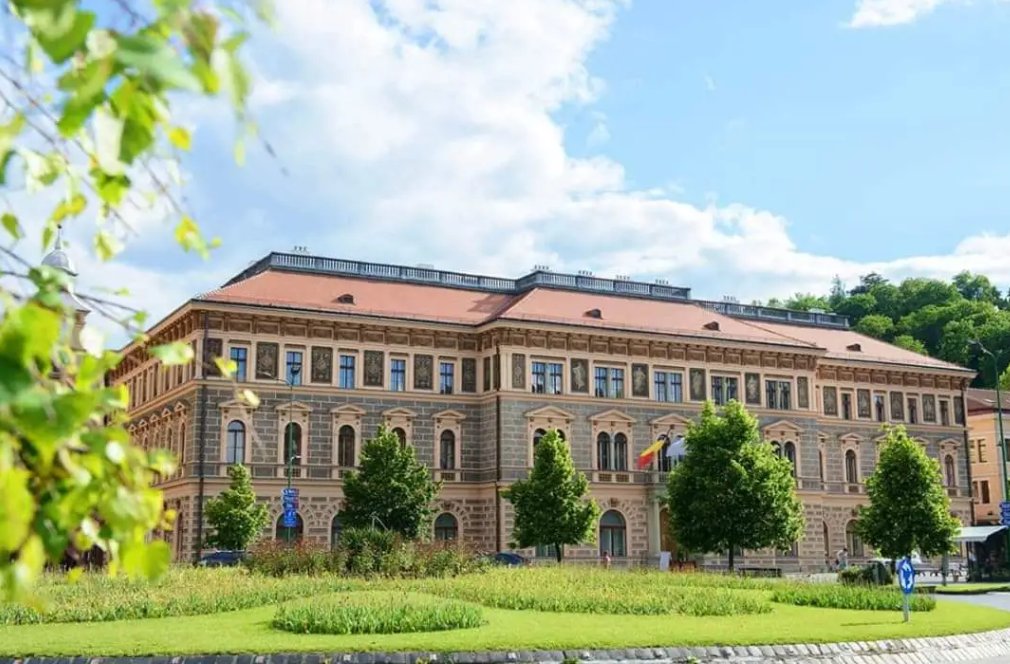
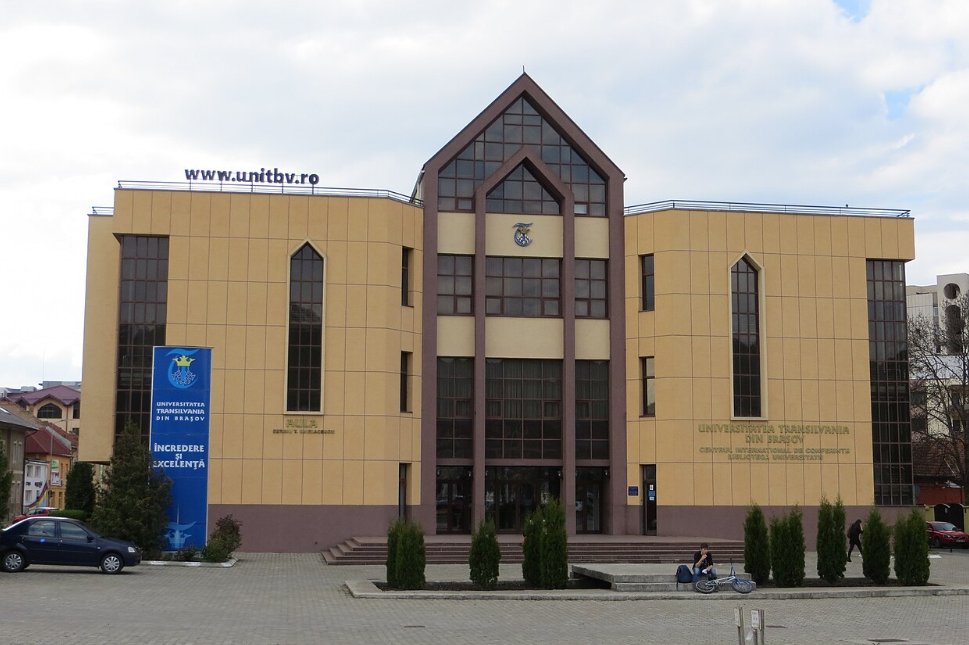
Address:
No. 1, Sirul Beethoven st., 500123 Brasov, Romania (S-building) Brașov România
Phones:
+40-268-418600
+40-268-475705
How to get there?
✈️ By Plane
? To Brașov-Ghimbav International Airport (GHV)
This is the closest airport — about 12 km from Brașov city centre.
-
Airport → City Centre
-
Public bus (Line A1): Connects the airport to Gara Brașov (railway station), from where you can walk or change to local buses for central stops.
-
Taxi / Ride-hailing (Bolt / Uber): ~20–30 min to city centre (prices vary, often 70–100 RON).
-
Private airport transfer: Pre-booked transfers (shared or private) are available and often recommended for groups.
-
? Alternative Airports
✈️ Henri Coandă Airport – Bucharest (OTP)
Romania’s largest airport (~165 km south of Brașov).
-
Bus / Shuttle:
-
Direct minibuses (e.g., Direct-Aeroport) run from the airport to Brașov city (~3 h). Booking online is recommended.
-
-
Train:
-
Take the airport train to București Nord (North) station (~20–25 min), then a train to Brașov (~2 h 30 min) — a scenic and often reliable option.
-
-
Taxi or Private Transfer:
-
Direct taxi/private transfer from Bucharest airport to Brașov takes ~2 h 15 min; fares vary.
-
✈️ Sibiu Airport (SBZ)
~137 km west of Brașov: another option for international flights, followed by a bus/shuttle transfer to Brașov.
? By Bus / Train
? Train
Brașov is a major Romanian railway hub with frequent connections from cities like Bucharest, Cluj, Timișoara, and international stations.
-
From Brașov Railway Station:
-
If your venue is central (e.g., Aro Palace Hotel / Transilvania University), you can walk or take a short city bus/trolleybus ride from the station.
-
? Bus
-
Long-distance coaches connect Brașov with Romanian cities and airports.
-
Local RATBV buses and trolleybuses serve the city; major central stops include Livada Poștei (near venues like Aro Palace).
? By Car
From the South (Bucharest / E60)
-
Follow E60 / DN1 north toward Brașov.
-
Enter city and follow signs to your hotel or venue in the centre.
From West / North
-
Use E68 (from Sibiu) or other national roads toward Brașov.
-
Central parking options are limited — look for public parking or ask your venue/hotel.
City transport in Braşov
Public city transport in Brașov is operated by RATBV and consists of buses and trolleybuses covering the entire city, including the railway station, city centre, university areas, and hotels.
? Tickets
-
Tickets can be purchased:
-
From ticket kiosks at major stops
-
Via mobile apps or SMS (instructions posted at stops)
-
From ticket vending machines (available at key locations)
-
-
Tickets are validated upon boarding.
? Main Transport Hubs
-
Gara Brașov (Central Railway Station) – main arrival point by train
-
Livada Poștei – central bus hub, close to the old town and major hotels
-
Onix / Dramatic Theatre area – near central venues and accommodations
✈️ From Brașov–Ghimbav International Airport (GHV)
-
Take Bus Line A1 from the airport toward Gara Brașov (Railway Station).
-
From Gara Brașov, continue by local bus or trolleybus to your hotel or symposium venue.
?️ To Central Venues (Example)
For venues located in the city centre or university area:
-
Use local buses or trolleybuses stopping near Livada Poștei, Teatrul Dramatic, or Universitate
-
From these stops, venues are typically reachable on foot within a few minutes
? Alternative Transport
-
Taxis and ride-sharing services (Bolt, Uber) are widely available and inexpensive for short city trips.
-
Recommended for late-evening travel or direct door-to-door transport.